
If you are planning an animated video, series or ad, someone will soon ask whether the animatic is approved. So what is an animatic? This guide explains the animatic meaning in plain terms, how it differs from a storyboard and from finished animation, how one is made, and why skipping it is one of the most expensive mistakes in production.
Animatic meaning: what is an animatic in animation?#
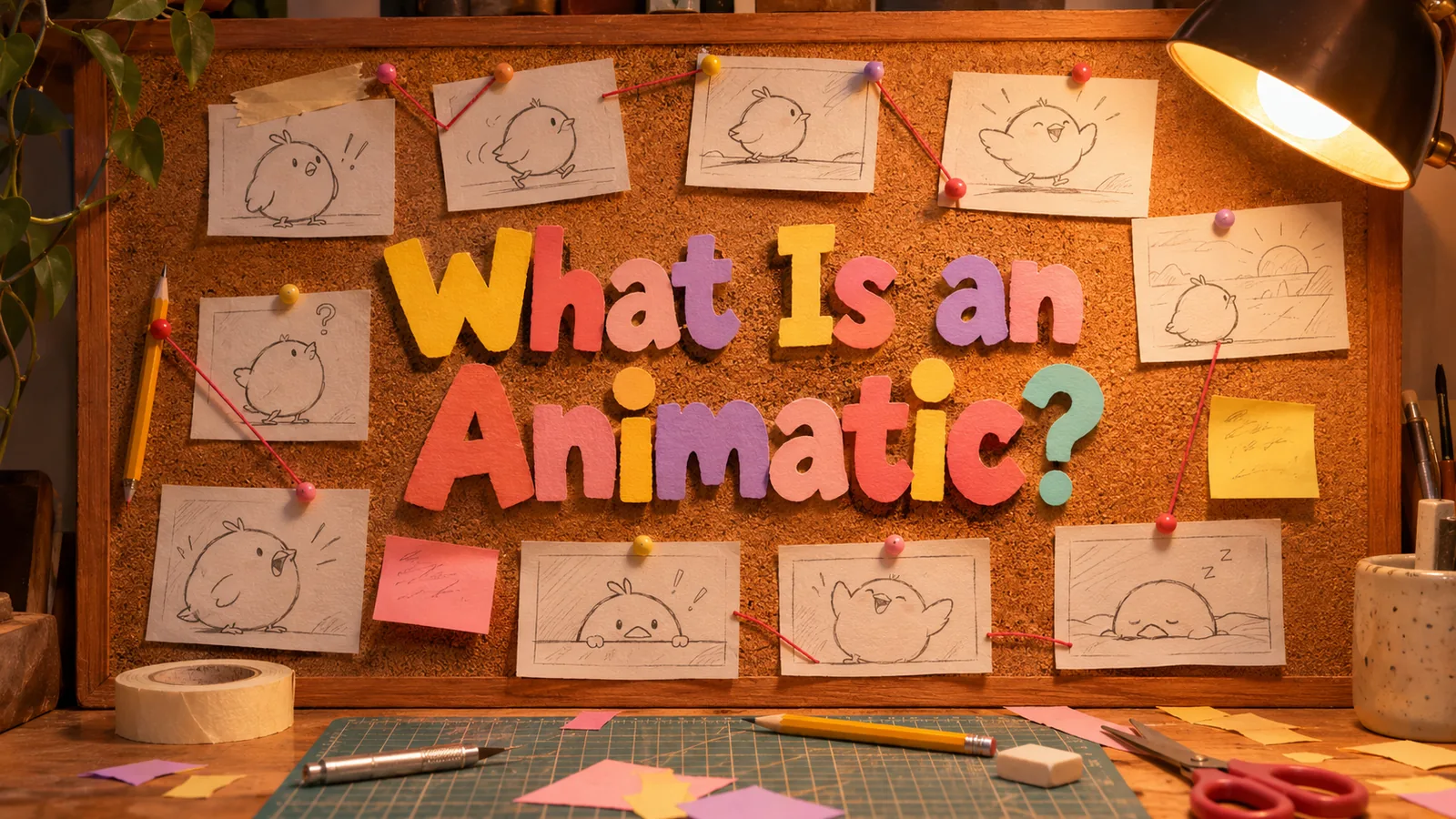
An animatic is a storyboard turned into a video. Each storyboard panel is held on screen for exactly as long as that moment will last in the final film, and the panels are cut to a temporary soundtrack of dialogue, music and sound effects.
The result looks rough on purpose. The drawings are sketches, and movement is limited to simple pans, zooms and cuts. What an animatic gets right is time: you can press play, watch the story from start to finish, and judge whether it works.
Put simply, the animatic definition most studios use is this: a timed, edited sequence of storyboard images with sound, used to test the pacing and story of an animation before production begins.
What an animatic includes#
A typical animatic contains five things:
- Storyboard panels: rough drawings of each shot, showing framing, character position and key action
- Timing: each panel held for its real on-screen duration
- Scratch audio: temporary voice-over or dialogue, placeholder music and basic sound effects
- Camera notes in motion: simple pans, zooms and cuts that show how the camera will move
- Transitions: where one scene cuts or fades to the next
Some productions go further and add rough in-between drawings or simple moving elements. This is sometimes called a story reel or a "leica reel". The purpose stays the same: test the film before building it.
Animatic vs storyboard: what's the difference?#
The difference between an animatic and a storyboard is time and sound.
| Storyboard | Animatic | |
|---|---|---|
| Format | Static panels on a page or screen | A video file |
| Timing | None: you read it at your own pace | Every shot timed to its final length |
| Sound | Dialogue written under panels | Scratch voice, music and effects |
| What it tests | Shot choice, framing, story beats | Pacing, rhythm, flow, total runtime |
| When it comes | First | Second, built from the storyboard |
A storyboard tells you what happens in each shot. An animatic tells you how it feels when those shots play in order. A scene can look perfect on a storyboard and still drag, rush or confuse once it is timed, and the animatic is where you find that out.
Animatic vs animation#
An animatic is a plan, and animation is the finished product.
In an animatic, the drawings are rough and mostly still. In final animation, every frame is fully drawn or rendered, characters move fluidly, backgrounds are finished, and the sound is mixed with final voice and music. The animatic is used as the timing blueprint for that final animation: animators build their shots to match the length and action locked in the animatic.
This is why the animatic is the last cheap stage of an animation project. Before it, changes cost sketches. After it, changes cost finished frames.
Animatic examples#
Animatics are usually internal working files, but you can see plenty of them in public:
- Feature film extras. Pixar and Disney home releases often include "story reels" and deleted scenes in animatic form: rough storyboard drawings timed to scratch dialogue, showing scenes as they existed before animation.
- TV and online advertising. Agencies build animatics of ad concepts so clients can approve the story, timing and voice-over before the production budget is spent.
- Fan animatics on YouTube. Artists set storyboard-style drawings to songs from musicals such as Hamilton and EPIC: The Musical. They show the core of an animatic clearly: still drawings timed precisely to audio.
- Kids' series and YouTube shows. Episodes are typically cut as animatics first, so the runtime, jokes and song timing are locked before animators start.
Watch any of these next to the finished version and the difference is obvious: the story and timing are already there, and only the final artwork is missing.
How to make an animatic#
The process is the same whether the final film is 2D or 3D.
- Lock the script. The animatic is built from the script, so changes to dialogue at this stage ripple into everything after it.
- Record scratch audio. A rough read of the dialogue, even by the team, gives the animatic its timing. Placeholder music sets the mood.
- Draw the storyboard. Sketch each shot, showing framing, characters and key action.
- Edit the panels to the audio. In editing or storyboard software, place each panel on a timeline and adjust how long it stays on screen to match the dialogue and action.
- Add simple camera moves and transitions. Pans, zooms and cuts show how the camera behaves.
- Review, revise, approve. Watch it with the client or director, adjust timing and shots, and sign it off before production starts.
Common software choices include Toon Boom Storyboard Pro, Adobe Premiere Pro, Adobe Animate and Blender's video editor. The tool matters less than the discipline of timing every shot honestly.
If you want to see where the animatic sits among the other production stages, this breakdown of how long a 2D kids' cartoon takes to make walks through the full pipeline.
Why your project needs an animatic#
An animatic protects your budget, your schedule and your story. Here is what it does for you:
- It catches problems while they are cheap. A slow scene, a confusing cut or a joke that doesn't land costs a few redrawn sketches to fix in an animatic. In final animation, the same fix means re-animating, re-rendering or re-colouring finished shots.
- It locks the runtime. You know exactly how long the finished piece will be, which matters for ad slots, platform limits and episode lengths.
- It gets everyone to agree. Clients, directors, voice actors and animators all watch the same thing and sign off on it. "That's not what I imagined" gets said at the animatic stage, not at delivery.
- It guides the voice recording. Final voice actors can perform to picture, so their timing matches the shots.
- It gives animators a blueprint. Every animator knows exactly how long their shot is and what has to happen in it.
- It works for 2D and 3D. In 3D, the animatic tells the team which assets, sets and camera angles are needed before modelling begins. That is a large saving when building assets is expensive.
If you're still deciding between formats, this guide to 2D vs 3D animation explains the trade-offs.
The one time teams are tempted to skip the animatic is when a deadline is tight. That is usually when it matters most, because a tight schedule leaves no room to redo finished animation.
Who uses animatics?#
Animatics are standard across animated film and TV, but they are not limited to animation studios:
- Advertising agencies use animatics to test TV and online ad concepts with clients, and sometimes with audiences, before paying for production.
- YouTube and kids' content creators use them to check pacing and runtime before committing to a full episode.
- Live-action filmmakers build animatics, sometimes called pre-visualisation, to plan action sequences, stunts and visual effects shots.
- Game studios use them to plan cutscenes and trailers.
The bottom line#
So, what is an animatic? It is a storyboard that moves: rough drawings, real timing and scratch sound, cut together so you can watch your film before it is made. It costs little, it shows you what works and what doesn't, and it turns every later stage of production from guesswork into execution. If your project skips the animatic, it is paying for its mistakes later, at full price.
Planning an animated project? Monal Digital, a full-service 2D and 3D animation studio in India, builds scripts, storyboards and animatics as part of its pre-production services, then carries them through animation services to final delivery. Talk to us about your project.
FAQs#
What is an animatic?#
An animatic is a rough, timed video made from storyboard drawings and a scratch soundtrack. It shows how an animated film will play, so pacing and story can be tested before full animation begins.
What is the difference between an animatic and a storyboard?#
A storyboard is a set of still drawings showing each shot. An animatic turns those drawings into a timed video with sound, so you can judge pacing, rhythm and total runtime.
What is the difference between an animatic and animation?#
An animatic is a rough plan made of mostly still sketches timed to sound. Animation is the finished product, with every frame fully drawn or rendered and final sound mixed.
What comes first, the storyboard or the animatic?#
The storyboard comes first. The animatic is built from the storyboard panels by timing them to scratch dialogue, music and sound effects in editing software.
What do people use to make animatics?#
Common tools include Toon Boom Storyboard Pro, Adobe Premiere Pro, Adobe Animate and Blender's video editor. Any software that lets you place images on a timeline with audio can be used.
Do 3D animation projects need an animatic?#
Yes. In 3D, the animatic shows which characters, sets and camera angles are needed before modelling starts, which helps avoid building assets that never appear on screen.